


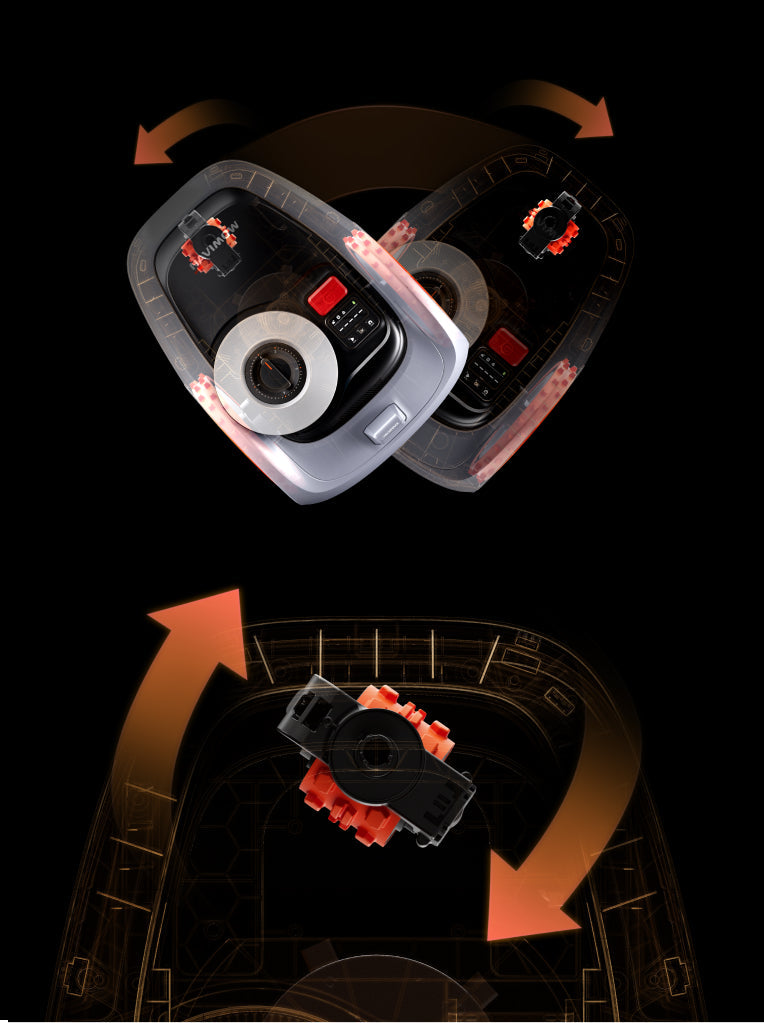
A well-maintained lawn without hours of mowing is now a reality thanks to modern robotic lawnmowers. However, choosing an efficient robotic lawnmower can be a challenge for owners of medium to large gardens. In our robotic lawnmower test for 1000 m², we show which models are truly suitable for medium to large gardens. We compared top models from various brands based on performance, battery life, navigation, climbing ability, and value for money. No matter what your requirements are, you can find the best robotic lawnmower for your 1000 m² lawn here.
Contents
The most important points for robotic lawnmowers up to 1000 m² in the test
If you're looking for a robotic lawnmower for a garden up to 1000 m², you'll find countless options on the market. How do you choose the most practical and suitable model for your needs? What criteria should you consider before buying? Keep the following points in mind:
- Area coverage & battery capacity: The larger the lawn area, the more important performance and battery life become. Ideally, it should automatically return to its charging station, allowing you to continue working without human intervention.
- Navigation & Orientation: For areas up to 1000 m², a robotic lawnmower without a boundary wire is usually the better choice, as it is easier to install, more flexible to use and more efficient to operate.
- Climbing ability & terrain adaptation: Many lawns are not perfectly level. Therefore, pay attention to the maximum incline that the robotic lawnmower can handle.
- Safety: In 2025, safety is more important than ever. Therefore, the device you choose should have stop sensors and obstacle detection.
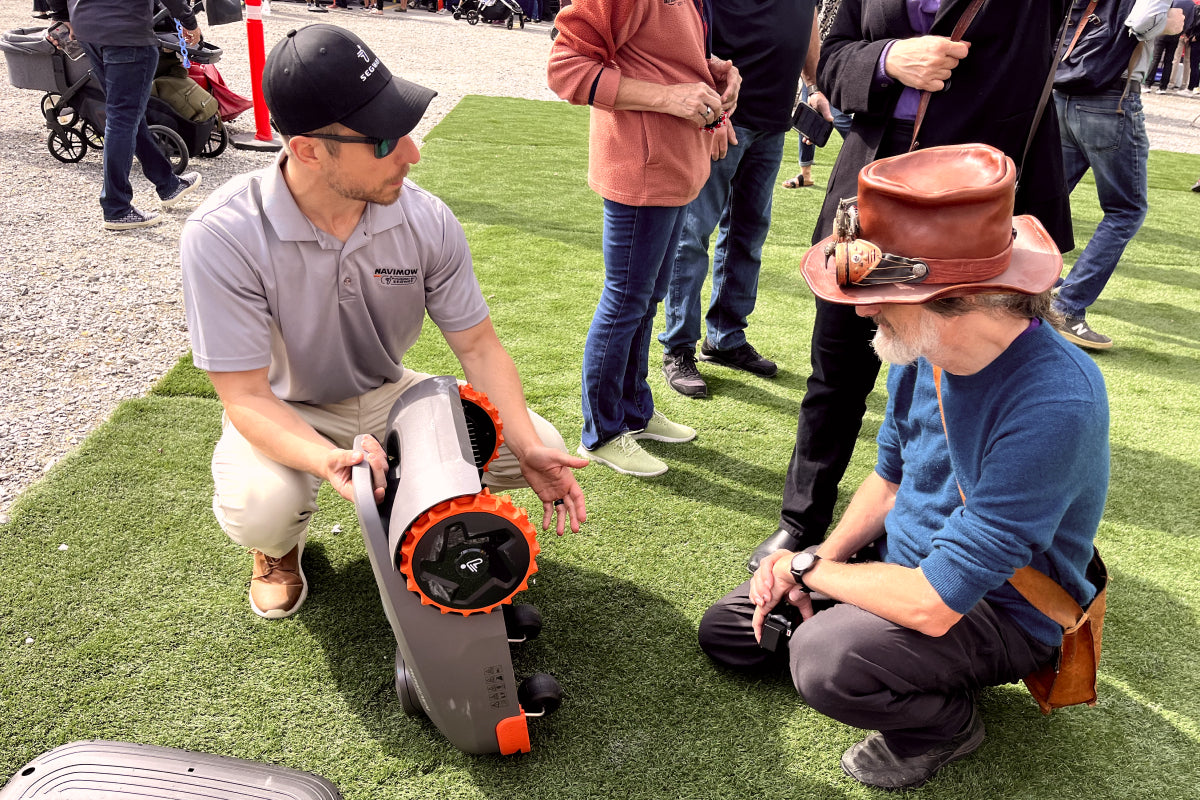
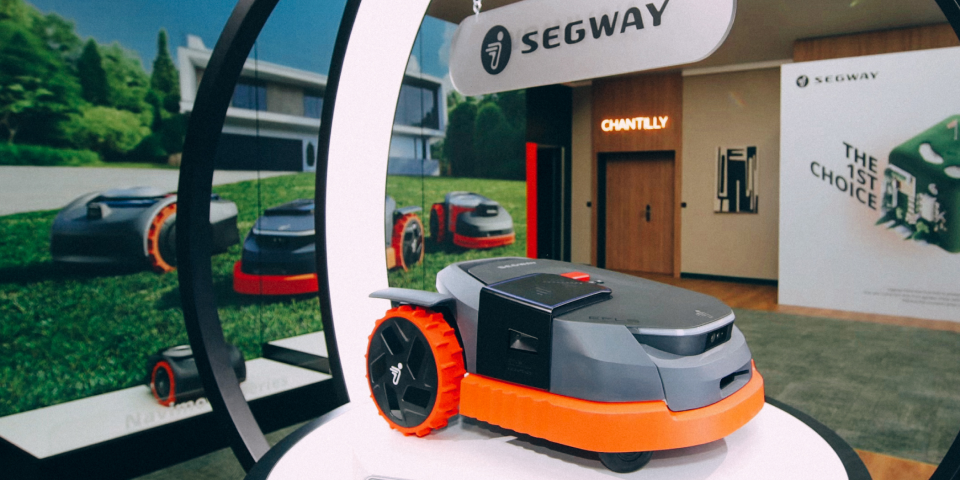
1. Segway Navimow i105
The Segway Navimow i105 is suitable for medium-sized lawns up to approximately 600 m². Although such models are designed for areas smaller than 1000 m², they may still provide coverage if the terrain is level and free of obstacles.
Thanks to its EFLS 2.0 Vision + GNSS positioning system, it operates without boundary wires. This robotic lawnmower can handle slopes of up to 30%, has a cutting height of 20–60 mm, and operates at only 58 dB.
Furthermore, the i105 can be controlled via an app using Wi-Fi and Bluetooth, allowing you to easily adjust your mowing schedule and track your mowing progress in real time. Compared to similar robots, it offers comprehensive features at a competitive price.
For users who need zone management or have a tight budget but still want a smart navigation experience, the Segway Navimow i105 is a more attractive solution.
Many users praise the easy installation, zone management, and obstacle detection. They are convinced that the robotic lawnmower offers better obstacle detection and a more systematic mowing path. However, some users point out that several adjustments are still necessary in complex terrain.

Advantages:
- No boundary wire required, easy installation
- Built-in camera for reliable obstacle detection
- Quiet operation, approx. 58 dB
- Intuitive app interface
- Supports multi-zone management
Disadvantages:
- Depending on signal quality. Navigation stability may be affected if trees obstruct the view.
- Insufficient edge mowing performance
Segway Navimow also offers other excellent robotic lawnmowers. If the features of the Navimow i105 do not meet your requirements, we recommend that you look at other models in the Navimow i-series.
2. Dreame A2
Dreame A2 is a top-of-the-line intelligent robotic lawnmower, officially recommended for lawns up to approximately 3000 m².
Equipped with a 3D ultra-sensor system and AI camera, it can create a 3D map of a 1000 m² garden without boundary wires for efficient mowing. Thanks to AI recognition, it also reliably analyzes its surroundings and detects obstacles and small animals.
In addition to its excellent and stable mowing capabilities, Dreame A2 also offers a very special feature – real-time video monitoring, which makes it a reliable garden guardian.
For gardens with complex terrain, slopes, numerous obstacles, and intricate boundaries, the Dreame A2 is an excellent choice. Its outstanding technical performance is also undeniable for users who want to minimize manual intervention and are interested in robotic intelligence.

Advantages:
- Automatic border detection and map creation
- Powerful navigation and intelligent obstacle avoidance
- EdgeMaster™ cutting system for thorough edge cutting
- Real-time video surveillance for patrol protection
Disadvantages:
- Very expensive
- Oversized features, possibly exceeding your requirements
3. ECOVACS GOAT O800 RTK
The ECOVACS GOAT O800 RTK is another cost-effective robotic lawnmower, recommended for lawns up to 800 m². The device creates a wireless map in less than 15 minutes and operates without boundary wires. Real-time cameras allow it to navigate around obstacles like flowerpots with greater precision. The GOAT O800 RTK is also extremely maneuverable.
It can handle a maximum incline of 45% and even navigate narrow streets of only about 0.7 meters. This robotic lawnmower is an excellent choice for lawns of approximately 1000 m² with narrow paths or trails. It is also perfectly suited for gardens with uneven terrain or slopes.
Users report easy installation and good value for money, but complain that the automatically generated maps are not always completely reliable.

Advantages:
- No boundary wire required, virtual map creation via app
- Navigation in narrow passages and on slopes
- RTK + LiDAR + camera for precise navigation, even in shaded areas
- Large battery capacity for long runtime
Disadvantages:
- Poor edge mowing performance, especially with automatic mapping
- Sometimes overlooks obstacles smaller than 10 cm.
4. Eufy E15
The Eufy E15 is designed for medium-sized lawns in private gardens and, according to the manufacturer, is suitable for areas of approximately 800 m². Thanks to its compact design, it navigates effortlessly even through gardens with many corners and angles.
This robotic lawnmower uses vision-based autonomous navigation and requires no boundary wires or RTK antennas, simplifying installation. It's also worth noting that it automatically creates a map of the test area and uses stereo cameras for remarkably precise navigation. The 93 Wh battery ensures a long runtime.
For medium-sized gardens with a weak signal or defined edges, many users prefer the Eufy E15. However, some people report that the device can occasionally be overly cautious. It may mistake overhanging plants or brown patches for obstacles and avoid them. Since the Eufy E15 robotic lawnmower relies entirely on its visual navigation system, it is recommended to use it only during the day.

Advantages:
- Automatic mapping, no GPS required
- High battery capacity, long battery life
- Intelligent AI obstacle detection
Disadvantages:
- Poor performance at night or in dark environments
- Occasionally avoid grassy areas that are not clearly visible.
- Long charging time
5. Mammotion LUBA mini AWD 800
The Mammotion LUBA mini AWD 800 is also a powerful robotic lawnmower that doesn't require a boundary wire. It is recommended for lawns of approximately 800 m² and can also cover 1000 m². It features all-wheel drive (AWD) and offers a maximum climbing ability of up to 80%, surpassing almost all other robotic lawnmowers on the market.
Its RTK + UltraSense AI Vision navigation system enables automatic mapping and reliably detects small obstacles. Although the charging time is longer, you can mow up to 250 m² of lawn on a single charge.
For complex or steep gardens, you should consider the Mammotion LUBA mini AWD 800. Most users report high efficiency and excellent performance. However, one user on Reddit reported that after a few months of use, the device repeatedly crashed due to a lack of signal or being out of range.

Advantages:
- Unique design
- 80% climbing ability
- Excellent obstacle detection
- High safety, low risk of knife cuts
Disadvantages:
- Poor edge mowing performance
- Frequent connection problems
- Occasional signal loss and lack of Wi-Fi connection
6. Worx Landroid M700Plus WR167E
The Worx Landroid M700 Plus WR167E is an intelligent robotic lawnmower for approximately 700 m². It uses the AIA™ navigation system and Cut-to-Edge technology to mow particularly close to the edges.
Thanks to Wi-Fi and Bluetooth connectivity, the device can be controlled either directly via the button on the robot or remotely via the app – including over-the-air (OTA) updates. The robotic lawnmower also automatically adapts to uneven terrain to achieve optimal mowing results. The Worx Landroid M700 Plus WR167E offers excellent value for money and moderate maintenance costs. It is therefore ideal for users with a limited budget and high demands for intelligent features.
In actual user reports, the Worx Landroid series demonstrated stable performance across multiple mowing tasks. However, some tests have shown that the robotic mower occasionally leaves grass clippings in corners or along uneven lawn edges. A few users also pointed out that the robot cannot return reliably if the charging station is not level enough.

Advantages:
- Excellent value for money, renowned brand
- Noesis™ Cloud Computing for automatic mowing planning
- Automatic blade leveling to adapt to different terrain
- Supports OTA software updates for continuous improvement
Disadvantages:
- Boundary wires are required, which complicates installation.
- Edge cutting can introduce additional safety risks.
- Sensitive to uneven surfaces during charging and returning to the charging station
Conclusion: The best robotic lawnmowers for lawns up to 1000 m² compared
Here we have summarized the specifications of all the robotic lawnmowers mentioned in our test in a table to highlight their similarities and differences. This will make it easier for you to compare which is the best robotic lawnmower for a 1000 m² lawn.
| Model | Segway Navimow i105 | Dreame A2 | ECOVACS GOAT O800 RTK | Eufy E15 | Mammotion LUBA mini AWD 800 | Worx Landroid M700Plus WR167E |
|---|---|---|---|---|---|---|
| Area output | 600 m² | 3000 m² | 800 m² | 800 m² | 800 m² | 700 m² |
| navigation | RTK+Vision | OmniSense™ 2.0: 3D ultra-sensor system with AI camera | RTK + 3D-ToF + AI camera | TrueVision™ technology | Mammotion iNavi™ Service (NetRTK+Vision) | AIA™ technology |
| Without boundary wire | Yes | Yes | Yes | Yes | Yes | No |
| gradient | 30% | 50% | 45% | 32% | 80% | 35% |
| App control | Yes | Yes | Yes | Yes | Yes | Yes |
| Noise level | 58 dB | 55 dB | 57 dB | 56 dB | 60 dB | 67 dB |
| Mowing time per battery charge | 60 minutes | 97 minutes | 65 minutes | 120 minutes | 120 minutes | 154 minutes |
| Waterproofing | IP66 | IPX6 | IPX6 | IPX6 | IPX6 | IPX5 |
| Price | €799 | €1699 | €899 | €1499 | €1399 | €370 |
Based on the results of our 1000 m² robotic lawnmower test, we recommend the most suitable model for you. If your garden has hilly terrain, the Mammotion LUBA mini AWD 800 with all-wheel drive and slope capability is the best choice. If you only use the robotic lawnmower during the day and value a high degree of automation, the Eufy E15's wireless operation and intelligent scheduling features are very practical. Users interested in intelligent object recognition can opt for the Dreame A2, whose combination of LiDAR and AI camera enables more precise navigation and obstacle avoidance. However, the prices of these three models are relatively high.
In comparison, the Segway Navimow i105 and the ECOVACS GOAT O800 RTK are more affordable. They also feature advanced navigation systems and don't require boundary wires, making them ideal for lawns of around 1000 m². If you don't mind using a traditional boundary wire, the Worx Landroid M700Plus WR167E also offers consistent and reliable mowing performance at a lower price.

Share: