


In recent years, robotic lawn mowers have established themselves as one of the most convenient and time-saving solutions for lawn care. Compared to conventional lawn mowers, robotic lawn mowers offer greater efficiency, less physical effort, and a better environmental footprint. You may be wondering whether such an excellent robotic mower also comes with a hefty price tag. However, this isn't the case; in the long run, a robotic lawn mower is undoubtedly a cost-effective choice. Next, we'll introduce you to both conventional lawn mowers and robotic lawn mowers and recommend a particularly good model.
Contents
Why are robotic lawnmowers more cost-effective?
Conventional lawn mowers generally come in two types: manual mowers and electric or gas-powered mowers. These typically require manual operation and are powered by human power or fuel. Robotic mowers, on the other hand, are automated devices powered by batteries that can usually mow independently thanks to sensors and programming. To understand why robotic mowers are more cost-effective than conventional mowers, we must first examine their respective strengths and weaknesses. Next, we will explain the respective advantages and disadvantages of these two types of mowers.

| Conventional lawn mowers | Advantages: | Disadvantages: |
|---|---|---|
| Lower costs: Compared to robotic lawnmowers, conventional lawnmowers require a lower initial investment. | Efficient mowing: On large areas or lawns with a lot of weeds, conventional lawn mowers can get the job done quickly. | High manual effort: The user must constantly push the machine during operation, which is physically demanding, especially on larger lawns or steep slopes. |
| High adaptability: Suitable for different lawn types, especially for areas with obstacles or irregular shapes. | No charging required: No worries about battery life, allowing for longer continuous use. | Noise and pollution: Gasoline-powered lawn mowers generate significant noise and emit exhaust fumes, which lead to environmental pollution. |
| Maintenance and repair: Regular checks of oil, fuel, etc. are required, which makes maintenance relatively complex. |

| Robotic lawnmower | Advantages: | Disadvantages: |
|---|---|---|
| Automated operation: Robotic lawnmowers can operate unattended, saving time and effort on manual labor. | Quiet and environmentally friendly: These mowers produce minimal noise and emit no exhaust fumes, making them more environmentally friendly. | Significant initial investment: Compared to conventional lawn mowers, robotic lawn mowers are generally more expensive, especially premium models. |
| Smart features: Most models have smart features such as GPS, sensors, and rain sensors. | Time-saving: Regular automatic mowing eliminates the effort required for manual operation. | Battery life and charging concerns: Robotic lawn mowers must be charged before use; excessive charging cycles can reduce the battery's lifespan, requiring replacement over time. |
| Limited adaptability: On overgrown or densely overgrown lawns, robotic lawn mowers may not be able to match the efficiency and effectiveness of conventional lawn mowers. |
In summary, both conventional lawn mowers and robotic lawn mowers offer significant functional advantages. For example, the greatest strength of robotic lawn mowers lies in their high degree of automation, which allows them to perform tasks independently while you are away. Conventional lawn mowers, on the other hand, require manual operation but are better suited for large areas or lawns with heavy weed growth. However, in terms of value for money, robotic lawn mowers are superior to conventional models. Although they require a higher initial investment, they save users long-term labor and maintenance costs, consume significantly less energy, and offer excellent environmental and safety features.
How much does a good robotic lawnmower cost?
The price of robotic lawn mowers depends on factors such as brand, functionality, and coverage area. An entry-level model typically costs between €300 and €500. Mid-range robotic lawn mowers generally fall in the price range between €500 and €1,200. High-end robotic lawn mowers, on the other hand, cost more than €1,200. Established brands such as Kress, Husqvarna, and Navimow offer higher-priced models that typically include advanced features such as intelligent navigation, automatic charging, and adaptation to complex terrain. Next, we select a model from each of these three brands that is suitable for small private lawns and compare their price-performance ratio.
How much does a Husqvarna robotic lawnmower cost?

| Husqvarna Automower® 305E NERA | Area capacity: | 600 m² |
|---|---|---|
| App controlled: | Supports | Cable type: |
| Physical cable | Maximum gradient on the boundary wire: | 20% |
| Price: | 1,699.00 € |
How much does a Kress robotic lawnmower cost?

| Kress RTKⁿ 600 m² robotic lawnmower | Area capacity: | 600 m² |
|---|---|---|
| App controlled: | Supports | Cable type: |
| Without boundary wire | Maximum gradient on the boundary wire: | 40% |
| Price: | 1,499.00 € |
How much does a Navimow robotic lawnmower cost?

| Navimow i105 robotic lawnmower | Area capacity: | 600 m² |
|---|---|---|
| App controlled: | Supports | Cable type: |
| Without boundary wire | Maximum gradient on the boundary wire: | 30% |
| Price: | 799,00 € |
In summary, while the basic features of these three robotic lawnmowers are largely comparable, Navimow offers a relatively lower price, significantly better value for money. Therefore, I will now give you a detailed introduction to the Navimow i105 robotic lawnmower, an extremely cost-effective option.
Navimow i105 robotic lawnmower – The cost-effective choice for robotic lawnmowers without boundary wires
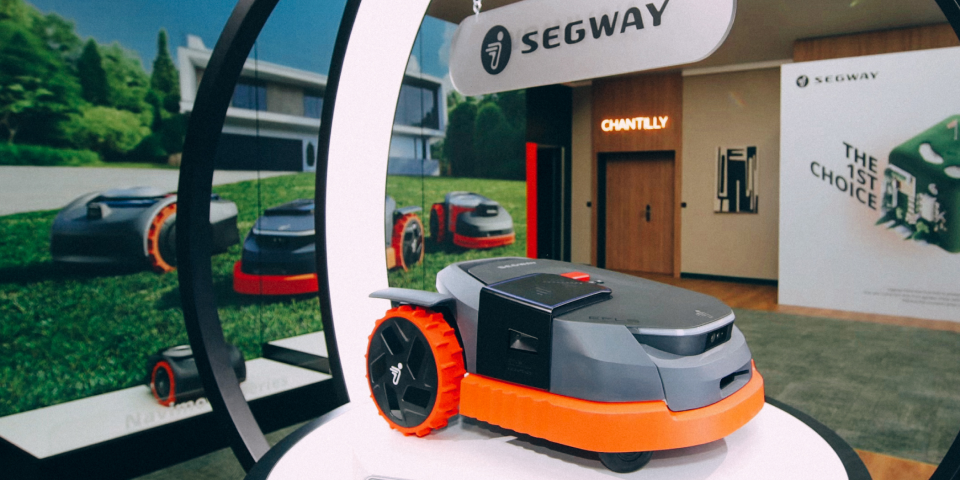
The Navimow i105 robotic lawnmower is a powerful intelligent robotic lawnmower from the Navimow i-series , launched by Segway. This robotic lawnmower is primarily designed for small private lawns up to 600 square meters. It features the improved EFLS 2.0 positioning technology, AI-assisted mapping, and VisionFence image-based obstacle avoidance. The Navimow i105 robotic lawnmower supports app control and multi-zone management, handles slopes of up to 30% (17°), and cuts grass heights from 20 to 60 mm. Compared to the basic models of robotic lawnmowers from Husqvarna and Kress in similar application scenarios, the Navimow i105 robotic lawnmower performs exceptionally well in all areas while maintaining a relatively low price, making it an excellent value. Next, we will introduce in detail some of the most important features of the robotic lawnmower mentioned above.
High-precision navigation
The Navimow i105 robotic lawnmower features enhanced EFLS 2.0 positioning technology, which delivers centimeter-level precision. This ensures the mower navigates your lawn precisely, even in challenging environments such as narrow paths, under trees, or near fences. The mower doesn't miss any spots and doesn't waste time mowing the same area twice, resulting in a more even and thorough cut.

Excellent surveying and identification skills
Equipped with AI-assisted mapping and image-based obstacle avoidance VisionFence, it accurately detects the contours of your garden and effectively navigates around obstacles, allowing it to effortlessly handle even complex garden layouts.

Functionality for customizing multiple zones
The Navimow i105 robotic lawnmower features advanced multi-zone adaptation features. This allows you to set individual mowing schedules and directions for different areas of your lawn. Whether it's flowerbeds, narrow paths, or expansive lawns, you can adapt the mowing schedules to the specific characteristics of each zone.

Conclusion
Compared to conventional models, robotic lawnmowers offer many advantages, including automation, low noise levels, and a better environmental footprint. While the initial cost is higher, they save time and maintenance costs in the long run. The Navimow i105 is a particularly cost-effective option, offering advanced technology like precise navigation and AI-assisted obstacle avoidance without breaking the bank. Overall, the Navimow i105 is an excellent choice for small lawns that require efficient and intelligent maintenance.
FAQs on the topic How much does a robotic lawnmower cost
How much does a robotic lawnmower without a boundary wire cost?
Robotic lawnmowers without a boundary wire, also known as "wireless or GPS-controlled robotic lawnmowers," are generally more expensive than conventional models that require boundary wires. Prices vary depending on the brand, model, and features. Generally, the base price for this model is between €700 and €1,500.
How much does a robotic lawnmower cost including installation?
Generally, the cost of purchasing a robotic lawnmower includes the installation fee. The price of robotic lawnmowers depends on factors such as brand, functionality, and coverage area. Cheap robotic lawnmowers typically cost around €200, while luxury models can cost over €3,000.
How much does a robotic lawnmower cost in electricity per year?
The annual electricity costs for a robotic lawnmower depend on several factors, such as the device's power consumption, mowing frequency, and the size of the garden. Typically, a robotic lawnmower consumes an average of 5 to 7 kilowatt hours per month. At an electricity price of approximately €0.30 per kilowatt hour, the annual electricity costs would amount to approximately €18 to €25.20.

Compartir: