


For many garden owners, a well-maintained, healthy, and lush garden is desirable. At the same time, interest is growing in sustainable gardening methods that benefit both the environment and the garden itself. One such method is mulching the lawn: grass clippings are left on the soil as a natural fertilizer.
But what exactly are the advantages of mulching the lawn? Are there any risks? How can this method be used correctly to truly improve the health of the garden? This article addresses all these questions.
Contents
- Mulching the lawn: What is it?
- Mulching vs. mowing the lawn: Clear advantages
- Mulching your lawn: Disadvantages & Important information
- Tips: When and how often to mulch your lawn?
- Mulching the lawn despite weeds?
- Robotic lawnmowers: perfectly suited for mulching the lawn!
- FAQs about mulching the lawn
- Conclusion
Mulching the lawn: What is it?
"Mulching the lawn" is a special gardening technique where the clippings are shredded during mowing and distributed directly onto the soil. Most modern lawnmowers have this function.
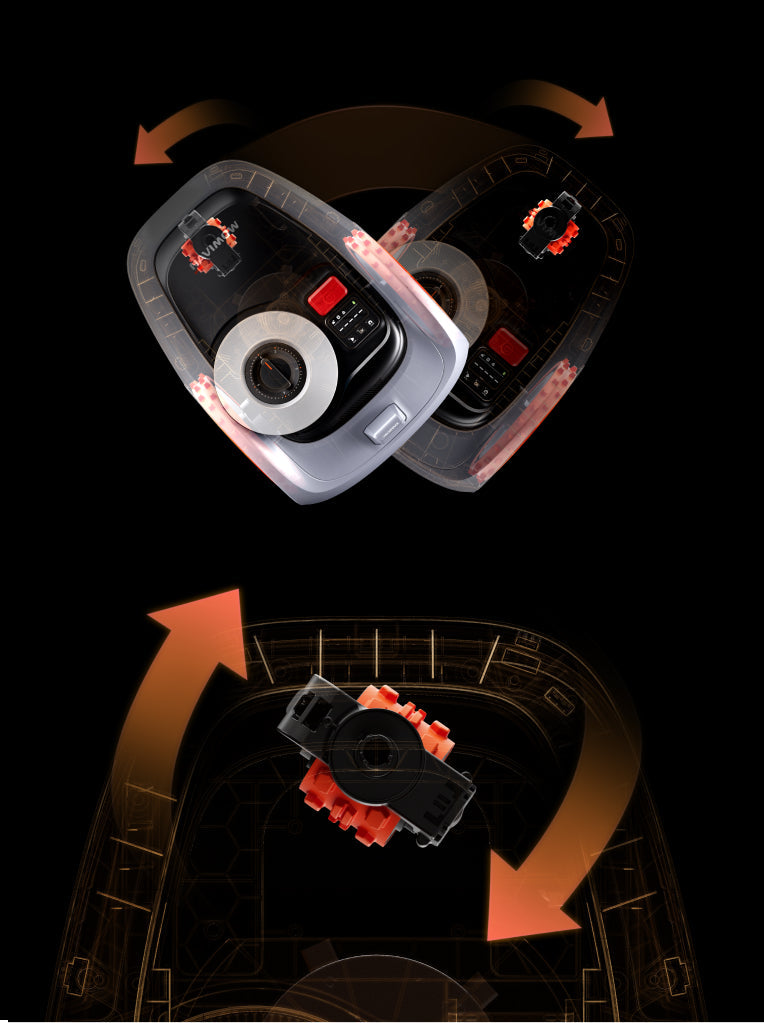
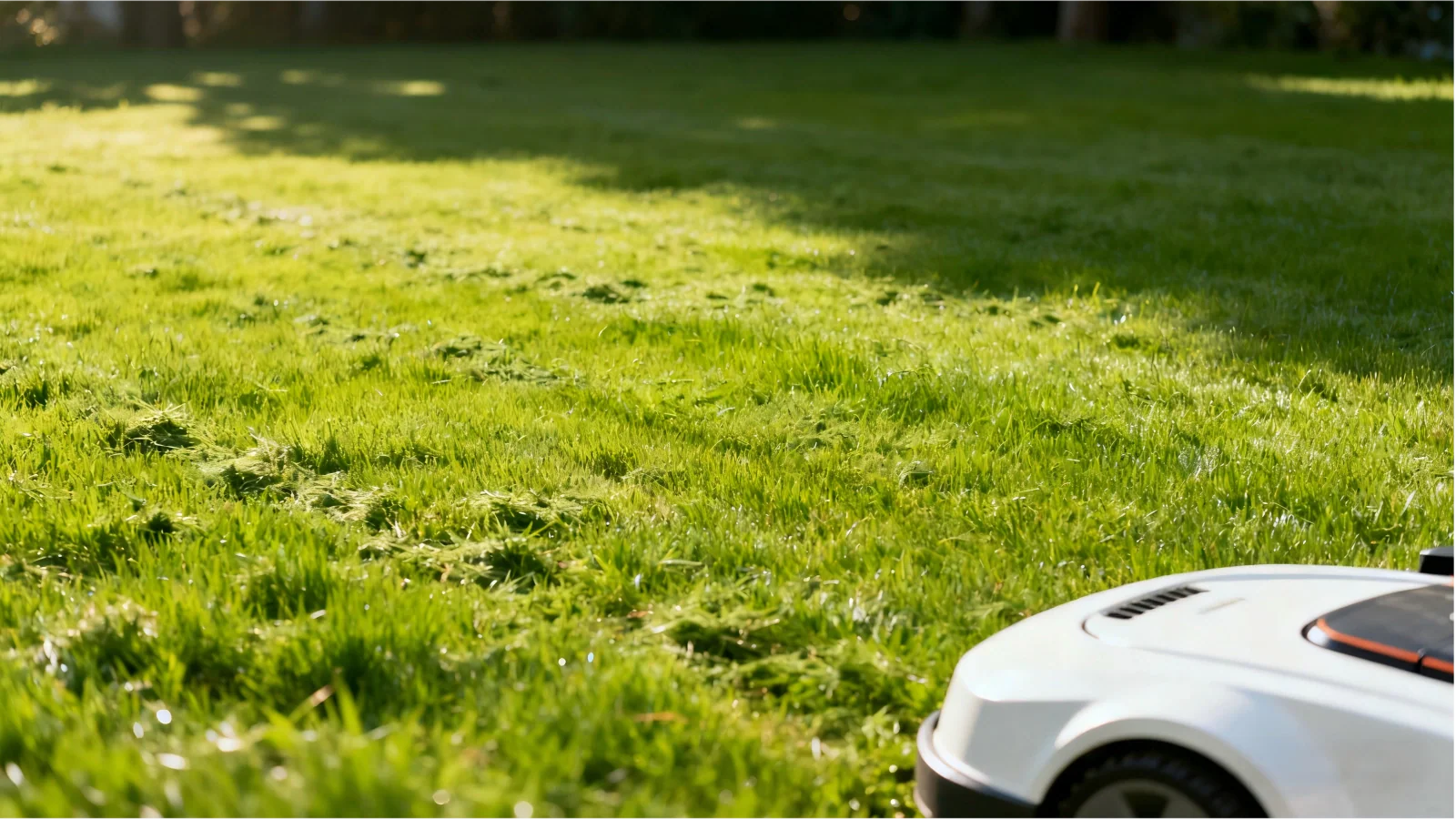
One example is the Segway Navimow robotic lawnmower, which uses special blades to cut the blades of grass multiple times, shredding them into tiny particles. These fine fragments become lodged between the blades of grass, are practically invisible, and begin to decompose immediately.

The key advantage of this method lies in the fact that the mulch serves as a natural source of nutrients. During decomposition, essential substances such as nitrogen, potassium, and phosphorus are returned to the soil—precisely the nutrients needed for grass growth. This creates a closed nutrient cycle, similar to that observed in natural forest ecosystems where fallen leaves and plant debris continuously enrich the soil.
Mulching vs. mowing the lawn: Clear advantages
Mulching offers significant advantages over conventional mowing methods (where the cut grass is removed and not left on the lawn):
| criterion | Mulching the lawn | Classic mowing |
|---|---|---|
| Cuttings | It remains finely shredded on the lawn. | It is collected and disposed of. |
| Nutrient cycle | Closed - nutrients return | Nutrients are lost |
| fertilization | Little to no additional fertilization is needed. | Regular fertilization is important. |
| Soil quality | Humus build-up, improved soil structure | No soil improvement |
| moisture | Mulch reduces evaporation | The soil dries out faster |
| Time required | Less effort, no grass catcher | Increased effort due to emptying |
| Appearance of the lawn | Natural, dense, sustainable | "Clean," but without a protective layer |
| Environmental friendliness | Very high - no waste | Less clippings are produced. |
In short, mulching with grass clippings has many advantages for garden maintenance – whether sustainable ecology is important to you or you simply want to reduce your workload. However, this method is not suitable for all situations. To avoid undesirable results, you should also be aware of the potential disadvantages.
Mulching your lawn: Disadvantages & Important information
While mulching lawns has few disadvantages, it can have negative consequences if certain details are overlooked. We've summarized the most important points for you:
Mulching requires regular and frequent mowing intervals.
For mulching to work, the grass blades must be cut short enough to decompose quickly. If the lawn is mowed too infrequently, the following situation can occur:
- Straws that are too long and difficult to chop.
- larger amounts of mulch that are not evenly distributed
- Clumps that cover the lawn and block light
- Yellow or rotten patches appear because the grass plants are suffocating.
Tip:
- Mulching only works reliably if you mow 1-2 times per week . For people who rarely maintain their lawn, traditional mowing is often more practical.
Wet grass poses a significant risk to mulching.
Damp grass clippings are among the biggest problems when mulching. As soon as the grass is wet – whether from rain, morning dew, or high humidity – the clippings clump together into small clumps that remain on the lawn surface. These clumps dry poorly, decompose very slowly, and create a permanently damp microclimate that provides ideal conditions for fungi, snow mold, and other diseases.
Practical rule:
- Only mulch dry grass. During damp, rainy periods, it's best to mow with a grass catcher to avoid damage.
Certain types of lawn are unsuitable for mulching.
Mulching is not a universal solution suitable for every lawn. Rather, it depends heavily on the individual conditions of the lawn. If your lawn falls into any of the following categories, mulching may not be a suitable method:
- permanently shaded (little sunlight, high soil moisture)
- heavy, clay soil with poor drainage and aeration
- existing thatch layer (visible as a brown, spongy layer when the grass is divided)
In such environments, grass clippings decompose slowly. Covering the grass leads to the accumulation of more mulch, forming an increasingly thick "organic barrier." This prevents water and oxygen from penetrating the soil and restricts root respiration. While the lawn may appear green temporarily, its foundation is progressively weakened, eventually becoming thinner and more susceptible to disease.
What needs to be done first:
- Loosen the soil (aeration, sand application, etc.), remove thatch (scarifying), improve drainage, optimize aeration, and increase sun exposure.
Tips: When and how often to mulch your lawn?
To avoid the potential problems associated with mulching, you should also be aware that the timing and frequency of mowing must be determined according to the lawn's growth and weather conditions. An unsuitable time or excessively long intervals between mowing can quickly lead to thatch buildup, rot, or lawn overload. Therefore, careful planning is essential.
Dry weather is ideal for mulching.
The most important principle is: only mulch when the grass is completely dry. A damp or dew-covered lawn causes the clippings to clump together and prevents even distribution. Damp mulch lies heavy on the lawn, hinders aeration, and creates ideal conditions for fungal diseases. Therefore, warm, rain-free days with a light breeze are best for mulching.
Transitional seasons: Spring and Autumn
Spring is the ideal time to mulch with grass clippings, as the warming soil and favorable microclimates promote rapid decomposition. Mulching in autumn is also possible, but should only be done on dry days. High humidity increases the risk of snow mold, so extra care is needed.
The correct frequency for lawn mulching
Generally, the lawn should be mulched once or twice a week. It's crucial that the grass blades are still relatively short and that no more than a third of their length is removed with each cut. This ensures the mulch remains fine, spreads evenly, and decomposes quickly without stressing the lawn.
Reduce the frequency of lawn mulching in summer
During prolonged periods of drought or extreme heat, the frequency of lawn mulching should be reduced. If mulching is still necessary, it is best to spread the clippings more finely to protect the stressed lawn and avoid putting additional strain on it.
Follow the one-third rule
A useful rule of thumb is: cut no more than a third of the grass length each time you mow. This prevents stress on the lawn and also ensures that the mulch layer doesn't become too coarse. If you cut too much at once, thick layers of mulch will form that decompose slowly and put stress on the lawn.

Mulching the lawn despite weeds?
Mulching is generally possible even in areas with existing weeds – and in many cases, it's even beneficial. In the long run, mulching can help suppress weeds, as a dense, well-maintained lawn leaves less room for unwanted plants. The fine mulch promotes soil life and strengthens the turf, making the lawn gradually more competitive.
However, there are a few points to consider. If the weeds are already very tall or widespread, mulching can actually encourage their spread. The clippings can disperse seeds, and the additional nutrients can cause some weeds to grow even stronger. In such cases, it's advisable to treat the affected areas first, for example, by manually removing the weeds, digging them out, or reseeding, before resuming regular mulching.
Mulching is perfectly fine for isolated, low-level weed infestations. With a healthy, dense lawn and the right maintenance frequency, the weeds will eventually lose their strength and be suppressed.
Robotic lawnmowers: perfectly suited for mulching the lawn!
When mulching your lawn, not only the right technique is important, but also a device that can mow frequently and evenly. Because mulching requires short mowing intervals and fine clippings, investing in a reliable robotic lawnmower that takes over this task automatically is worthwhile.
The Segway Navimow i-Series is particularly well-suited for this purpose. Regular mowing produces extremely fine mulch particles that decompose quickly and naturally strengthen the lawn. Precise navigation also ensures that every area is maintained evenly.
The Segway Navimow i105 is ideal for small and medium-sized gardens. It keeps the grass blades consistently short, thus ensuring perfect conditions for efficient and comfortable mulching.

FAQs about mulching the lawn
1. How can you tell if the mulch has decomposed properly?
Well-decomposed mulch falls between the blades of grass, darkens within a few days, and is barely visible. If, however, light-colored, recognizable grass clippings remain visible for longer, the clippings are usually too coarse or too moist.
2. Can mulching completely replace the use of lawn fertilizer?
In many cases, yes, but not always. Mulching provides a large portion of the necessary nutrients, but it doesn't address all soil deficiencies. For nutrient-poor soils, a light, targeted application of additional fertilizer can still be beneficial.
3. Is mulching also suitable for newly laid lawns?
Newly sown lawns should initially be mowed normally until the turf is sufficiently stable. Mulching is only suitable after several mowing sessions, as young blades of grass can otherwise be damaged when chopped.
4. Can you also mulch leaves?
In small quantities, yes, especially in autumn. Thin, dry layers of leaves mix well with grass. However, thick or damp layers of leaves should be removed beforehand, as they cover the turf.
Conclusion
Mulching is one of the most sustainable and beneficial methods of lawn care. With the right technique, it ensures a dense, healthy, and resilient lawn – all without additional fertilizer. However, mulching wet grass or excessively long blades can lead to problems. By proceeding with a little care, you can fully reap the benefits of this method and enjoy a healthy, attractive garden!


Share