


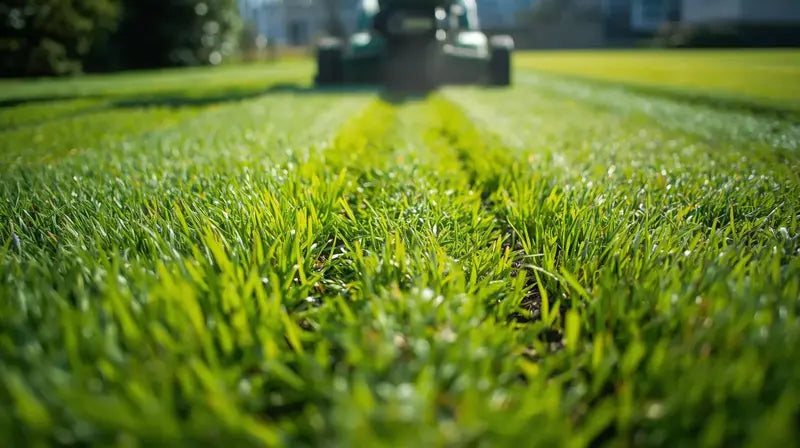
Many garden owners wonder if they can mow and scarify their lawn in a single day. Often, there isn't enough time in everyday life for multiple maintenance sessions, or the lawn already seems overworked and urgently needs thorough treatment. At the same time, there's the worry that incorrect timing could damage the lawn and cause it to recover slowly.
If you're wondering whether combining both tasks on the same day is sensible, efficient, or even risky, you're not alone. Conflicting recommendations online and contradictory advice from forums leave many people uncertain. This article will clearly and understandably explain when you can combine both tasks – and when your lawn is better off being left alone.
Contents
- What exactly are lawn mowing and scarifying?
- Lawn mowing vs. scarifying
- Is it possible to mow and scarify the lawn on the same day?
- The potential effects on lawn quality are manifold:
- The correct order for lawn care – this is how to do it optimally
- Detailed procedure: Mowing and scarifying on the same day
- Tip: Increase efficiency without overloading the lawn
- FAQs
- Conclusion
What exactly are lawn mowing and scarifying?
Many garden owners wonder if it's possible to mow and scarify the lawn on the same day. To answer this question reliably, it's worth taking a closer look at both steps. Regardless of whether you want to mow first or scarify, both measures pursue different goals and affect the health, density, and regenerative capacity of your lawn in very different ways.
Mowing the lawn – the foundation for a dense, resilient and well-maintained lawn
Mowing forms the basis of all lawn care, regardless of whether you plan to scarify later, mow beforehand, or perform both tasks on separate days. Regular mowing keeps the lawn even and gives it a stable structure. At the same time, mowing encourages denser grass growth, thus reducing the chances of weeds taking hold. The correct cutting height is particularly important: those who want to mow before scarifying should cut the lawn to about 3–4 cm to create optimal preparation for the next step.
Scarifying – deep care to remove thatch and moss
Scarifying is an intensive intervention in the lawn's turf, particularly beneficial if you're wondering when to scarify your lawn. The process involves cutting into the surface to remove thatch, moss, and dead plant matter. This improves soil aeration and creates space for new, strong shoots. If the lawn is mowed beforehand—that is, mow first, then scarify—the scarifier blades can penetrate the turf more effectively. Despite the short-term stress, scarifying has a long-term positive effect on the lawn's vitality and regenerative capacity.
Lawn mowing vs. scarifying
| mow the lawn | Scarifying | |
|---|---|---|
| Purpose / Goal | Uniform cutting height, denser growth, well-maintained appearance | Removal of thatch and moss, improved aeration and nutrient absorption |
| working method | Grass is cut from the top. | The turf is scratched, thatch and moss are removed. |
| Impact on the lawn | Encourages denser growth, less weeding | Intensive intervention, short-term stress, long-term regeneration |
| frequency | Regularly during the growth phase | 1-2 times per year; frequently asked question: when to scarify the lawn? |
| Suitable time | Every 1-2 weeks | Spring and possibly autumn |
| Impact on soil & felt | No direct felt removal | Removes felt, significantly improves floor ventilation |
Is it possible to mow and scarify the lawn on the same day?
Yes, but only in the right order! Many garden owners consider mowing and scarifying the lawn on the same day to save time or take advantage of good weather. In principle, it's possible to do both tasks in one day – but only if the order is correct: mow first, then scarify.
The reason for this lies in the different ways the lawn is worked. Mowing simply cuts the blades of grass, while scarifying penetrates deeper into the lawn surface, removing thatch and moss and putting more stress on the lawn. If the order of these processes is reversed or the work is too aggressive, the stress on the plants can increase significantly – with the risk that the lawn will regenerate less effectively or even be damaged.

The potential effects on lawn quality are manifold:
- Increased stress on the grass: If you mow first and then scarify, the grass is first cut short and then subjected to heavy stress. This can reduce its resistance to drought and disease.
- Slower regeneration: After scarifying, the lawn needs time to develop new shoots. If both tasks are carried out on the same day, the lawn has hardly any opportunity to recover between the treatments.
- Risk of scorching and drying out: Freshly scarified areas can dry out in direct sunlight. If the lawn is also mowed short, the natural protection of the leaves is lacking.
- Moss and thatch may not be removed optimally: Over-treated grasses can recover more slowly, causing thatch and moss to return faster, even after intensive care.
- Risk of soil compaction: Especially in damp soil, mowing and scarifying at the same time can put a strain on the soil structure, as the grasses are less stable and the equipment can sink in deeper.
For these reasons, experts recommend mowing or scarifying with a time interval between each step, so that your lawn gets the necessary recovery and remains healthy in the long term.
The correct order for lawn care – this is how to do it optimally
Many garden owners often wonder: should I mow first or scarify? The correct order can be crucial for a healthy, dense lawn.
1. Mow the lawn first – prepare the base
Mowing the lawn before scarifying ensures that the turf is prepared for the subsequent treatment. Cutting the grass to about 3–4 cm allows the scarifier to work more effectively. Loose leaves and clippings are removed, which helps to break up the thatch layer more easily.
2. Scarify afterwards – aerate the lawn
Scarifying removes thatch, moss, and dead plant material. It opens up the soil surface, allowing water, oxygen, and nutrients to penetrate more easily. The stress on the lawn is reduced if it has been mowed beforehand – therefore, mow first, then scarify.
3. Aftercare – Promoting Regeneration
Water the lawn thoroughly after scarifying. Light fertilization will encourage new growth. Bare patches can be reseeded to create an even lawn.
Detailed procedure: Mowing and scarifying on the same day
If you decide to mow and scarify your lawn in a single day, the correct order is crucial to maximize the effectiveness of both tasks and avoid unnecessarily stressing the lawn. Please follow these three steps:
Step 1: Preparatory mowing (low cut)
Before you begin scarifying, you need to prepare your lawn.
Action: Perform a short, preparatory cut. To do this, set your mower one level lower than during your regular mowing.
Purpose: This deep cut is necessary so that the blades or tines of the scarifier can optimally reach the underlying moss and thatch without being obstructed by excessively long grass blades. Important: Be careful not to cut more than one-third of the blade length to avoid shocking the lawn.
Step 2: Scarifying (dethatching and aerating)
After the preparatory cut, the scarifying can begin.
Action: Scarify the entire lawn area in lengthwise and crosswise strips. Setting the correct scarifying depth is of utmost importance; the tines should just touch the soil or penetrate to a maximum depth of 2–3 mm.
Goal: Remove thatch, moss, and dead plant material that has accumulated over time. Combining the short turf from step 1 with the correct depth guarantees the most effective cleaning.
Step 3: Final cleaning and maintenance
Scarifying almost always leaves behind a large amount of grass clippings and thatch material that must not remain on the surface.
Action: Collect all the material exposed by scarifying. Many modern scarifiers have collection bags; otherwise, a rake or a lawnmower with a grass catcher (acting as a vacuum) is required. A short follow-up mowing with high suction power can remove any remaining debris.
Objective: Thorough cleaning prevents the removed materials from immediately forming a new thatch layer or promoting fungal diseases. Immediate care: After cleaning, it's the ideal time for reseeding (through the opened soil pores) and applying a suitable regenerative fertilizer. This supports the rapid recovery of the grass.
Note:
- The lawn will be heavily stressed after these steps. Ensure adequate watering in the following days to promote regeneration.
Tip: Increase efficiency without overloading the lawn
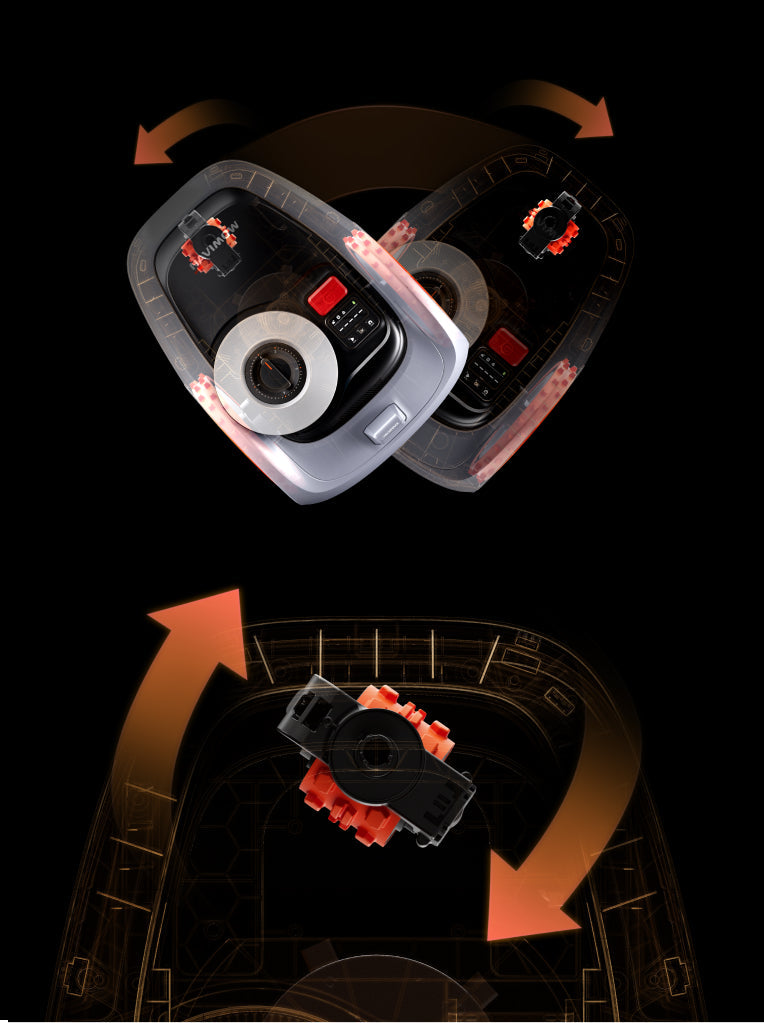
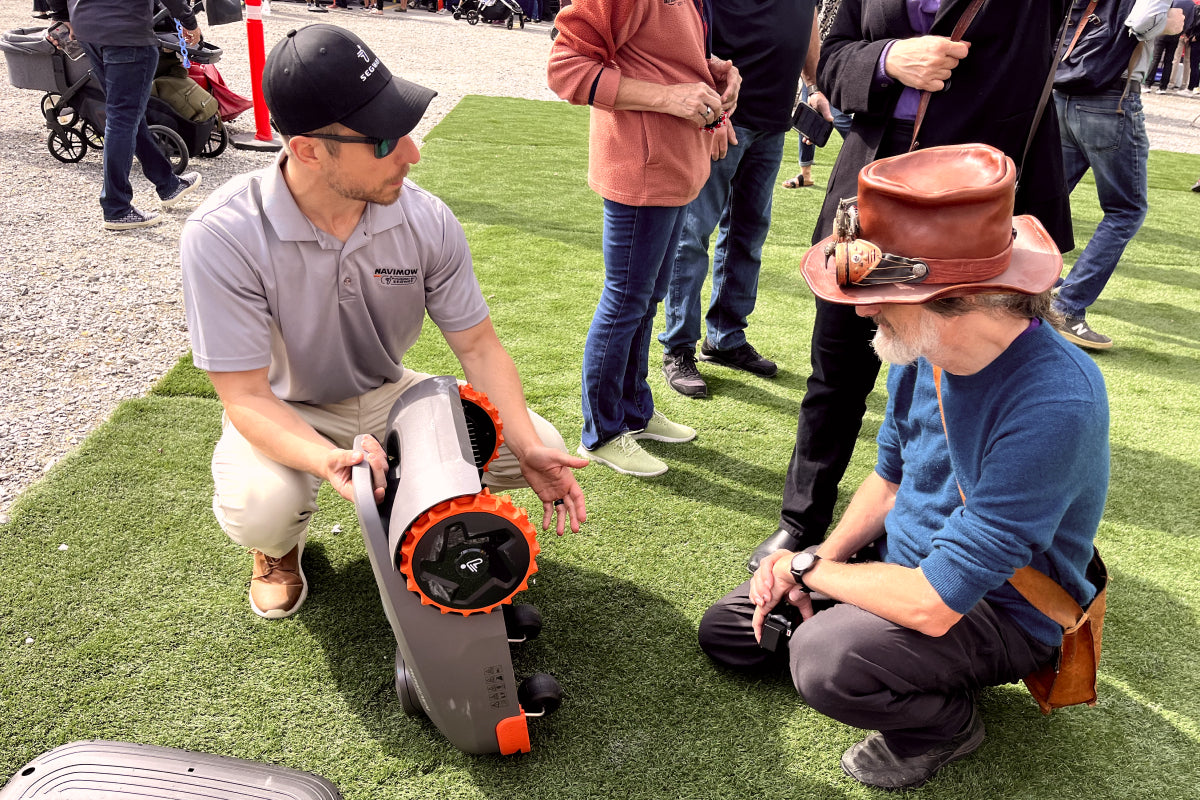
Many garden owners want to mow and scarify their lawns on the same day to save time. However, to completely avoid the risk of overworking the lawn on the same day, a smart robotic lawnmower offers a simpler and significantly less labor-intensive solution. It cuts the grass automatically, regularly, and at the optimal height – thus reducing your own workload to a minimum. Modern models like the Navimow are equipped with rain and weather sensors, automatically detect when mowing is advisable, and adjust their operation accordingly. This eliminates the possibility of overworking the lawn on unsuitable or consecutive days. The robot can also be conveniently controlled remotely via a smartphone app, allowing you to plan your lawn care flexibly. You don't have to worry about mowing and scarifying accidentally happening on the same day, as the robot only handles the mowing and autonomously takes weather conditions into account. This keeps your lawn dense, vibrant, and healthy, while saving you time and physical effort. A smart robotic lawnmower combines efficient automation with optimal lawn care.

FAQs
Can you scarify the lawn immediately after mowing?
Yes, that's generally possible – provided the order is correct: mow first, then scarify. It's important to use a moderate cutting height and to scarify gently so as not to stress the lawn unnecessarily. Thorough watering afterward and a light application of fertilizer will support regeneration and promote healthy regrowth.
In what order should I mow, fertilize, and scarify?
The recommended order is: mow first, then scarify, and finally fertilize if needed. Mowing before scarifying ensures that the grass is not overloaded and that the fertilizer can be optimally absorbed. This supports the vitality and density of your lawn.
How long should you wait before mowing the lawn after scarifying it?
After scarifying, the lawn needs a few days to rest. Generally, you should wait 3-5 days before mowing again. This rest period allows the grass to develop new shoots, especially if you mowed before scarifying, to keep the lawn healthy and dense.
When can I mow again after scarifying?
You can mow your lawn immediately after scarifying. However, if you have reseeded bare patches, you must wait before mowing again. Wait until the grass seeds have germinated and reached a height of about 5 cm. Only then should you mow again.
Conclusion
While mowing and scarifying can be done on the same day, it's only effective if the order is correct: mow first, then scarify. This reduces stress on the lawn and allows it to regenerate more quickly. Additional measures such as watering, light fertilization, and a short recovery period further help minimize potential damage. However, for those who want a perfect lawn with significantly less effort, intelligent, automated robotic lawnmowers are an excellent option. These keep the lawn at an optimal height, automatically adjusting their operation to the conditions thanks to weather and rain sensors, and taking over a large portion of the regular maintenance work. This allows you to achieve a visibly more even, denser, and healthier lawn with considerably less time and physical effort – all without frequent manual mowing or ill-advised double work on the same day.

Share