


Today's the day. Or maybe not. Because you were determined to finally mow the lawn, and then it rained heavily overnight. The mower is ready, and the grass still looks damp with dew. Well, that's not exactly perfect timing!
The question quickly arises: Is it even possible to mow a wet lawn without damaging the grass or the mower? While mowing in wet conditions is generally possible, the cut will quickly become uneven. And, as an added bonus, the soil suffers because damp ground gives way more easily.
But there's a much more relaxed way to handle the situation. Modern robotic lawnmowers – for example, the models in the Navimow i Series – automatically detect rain and high humidity. This not only saves homeowners a lot of hassle, but also ensures that the lawn looks more even and the blades stay sharp for longer.
Contents
- Why mowing in wet conditions is problematic in the first place
- Is it even possible to mow wet grass?
- How modern robotic lawnmowers automatically solve the problem
- Lawn care after rain – 4 tips for healthy lawns
- How automated systems compensate for the weather
- The conclusion: better to wait or automate.
- Frequently Asked Questions (FAQ)
Why mowing in wet conditions is problematic in the first place
Why does dampness cause such problems when mowing? The explanation is simple: A brief shower usually doesn't harm the lawn. However, truly wet soil and damp blades of grass are a completely different story. Then not only robotic mowers, but also battery-powered and petrol mowers struggle equally.
1. The lawn suffers from so-called wet mowing.
Wet grass blades become softer and more elastic. As a result, many blades bend away instead of cutting cleanly into the blade. The consequence? The tips fray or tear. The Royal Horticultural Society therefore recommends avoiding mowing damp areas whenever possible, because damaged blades are also more susceptible to fungal growth. And this is true: Moisture penetrates more quickly through torn areas, which can promote fungal infections such as snow mold (Microdochium).
2. The soil itself is damaged.
If the soil is very damp, the top few millimeters lose their stability. When walking, you then easily compress the structure. A lawnmower naturally adds even more weight, which compacts the top layer even faster.
3. The strain on technology and knives increases significantly.
Wet grass clippings quickly clog the mower deck. Many who have ventured into the adventure of mowing a wet lawn will attest to this. This slows down the blades, creates more resistance, and can unnecessarily strain the machine. Furthermore, moisture on the contacts of battery-powered devices can cause serious malfunctions. And yes, even robotic mowers have a limited tolerance for wet conditions. While the technology is protected, the blades simply operate less efficiently when the grass blades are sticking together due to moisture.

Is it even possible to mow wet grass?
Technically speaking: yes. Practically speaking: rather not. However, there are a few situations where a cut is still possible, if you look a little closer.
With light morning dew, a damp film on the blades of grass is generally not a problem. The crucial factor is whether the blades still release water when you run your hand over them. After a brief rain shower, a short dry spell is often sufficient, as long as the soil remains firm. Michigan State University points out that damp soil compacts more quickly with frequent mowing. This causes the roots to remain shallower. Using the right mowing technique is key. Anyone who works with blades professionally knows that sharp blades cut better. This is especially important when mowing the lawn in damp conditions. Dull blades tend to tear the grass rather than cut it cleanly.
Here are three important precautions.
- 1. Slightly increase the cutting height. It's best to raise the blades one or two notches. This prevents the blade from digging into soft soil, which can happen quite quickly in wet earth.
- 2. Keep the knives sharp. As we just mentioned: Wet stalks break more easily, and sharp blades significantly reduce the risk of frayed tips.
- 3. Remove the damp clippings. Wet grass clumps together quickly and tends to stick. This creates a kind of thatch layer that hardly allows air to pass through. But simply raking up the damp clippings after mowing is enough – your lawn will thank you.
| When you should definitely wait | If water collects on your shoes when you walk on the lawn, or if the ground noticeably gives way, it's clearly too early. In this condition, every mowing leaves compaction and tracks that can permanently impair root growth. |
|---|---|
| It's better to wait until the turf looks firmer again and the surface is dry enough – then cutting is really worthwhile. |
How modern robotic lawnmowers automatically solve the problem
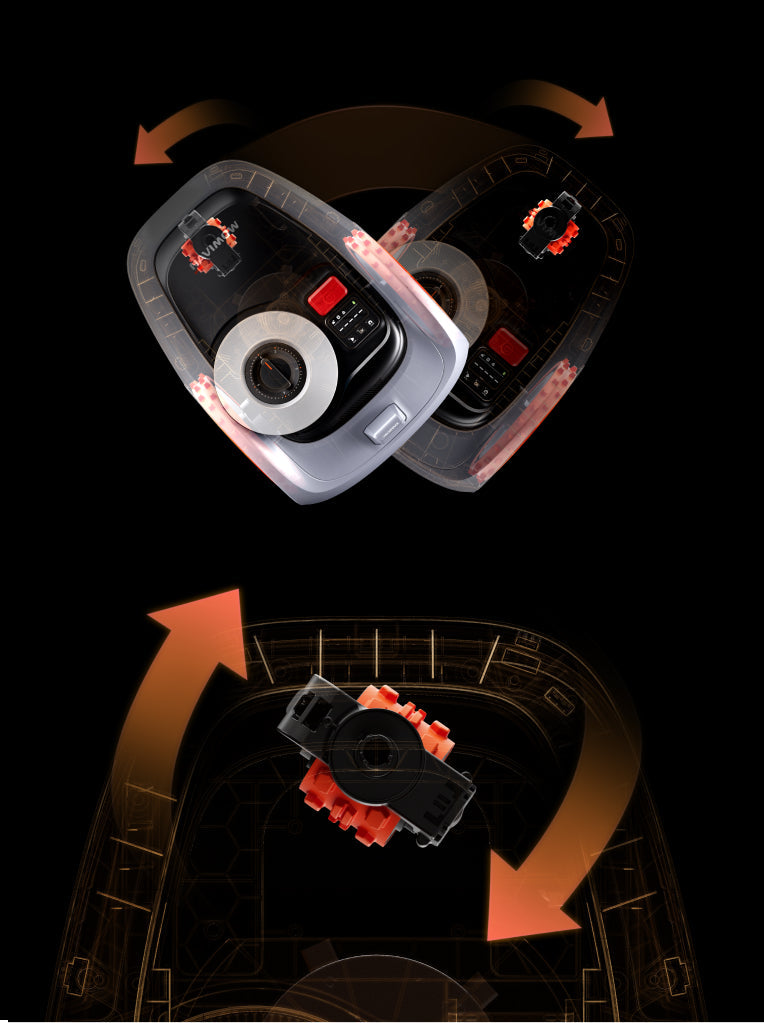
Mowing a wet lawn is no longer as tricky as it used to be. Modern robotic lawnmowers take many of the decisions off your hands, especially when the weather is unpredictable. Devices like the Navimow i105 or i108 from the wireless Navimow i Series react to moisture in real time and adjust their behavior automatically. In everyday use, this significantly reduces the need for monitoring, as you no longer have to constantly check the garden to see if it's dry enough.
The intelligent weather control
The i Series robots continuously analyze weather and environmental data. They detect rising humidity and changes in ground traction and automatically return to their charging station when necessary. This prevents the robot from cutting in wet conditions and simultaneously reduces wear on the blades. This is a point that is often underestimated, because the less resistance the blade encounters, the longer it stays sharp.
Water protection and durability
All i Series robotic lawnmowers are IP66 certified, meaning they are splash-proof and dustproof. A brief shower won't bother them. However, the crucial factor isn't the protection class itself, but how the robot assesses moisture: it distinguishes between light drizzle (which is usually not a problem) and actual wet conditions that could impair its drive or cutting performance.
Example: The Navimow i105 in practice
The Navimow i105 is ideal for small to medium-sized gardens. Its EFLS system creates a detailed digital map, allowing it to resume mowing exactly where it left off after a pause. This works regardless of the garden's layout. The integrated VisionFence™ camera detects obstacles, small puddles, or even bright reflections on wet grass, which the robot then automatically avoids. This ensures a more even cut, even if the weather during the week has been a bit more unpredictable than usual.

Lawn care after rain – 4 tips for healthy lawns
Anyone who wants to keep their garden in good shape after periods of rain should pay attention to a few simple things. Wet soil is more sensitive, and some areas need a little help to get back on their feet.
1. Wait for the right moment
It's best to wait until the surface is completely dry before mowing again. The blades of grass should feel taut and springy to the touch. A simple test almost always helps: if no film of water clings to your shoe sole when you walk on it, the ground is stable enough. This might sound trivial, but it's actually one of the most reliable indicators.
2. Remove any remaining cuttings
Grass clumps together particularly quickly in damp conditions. These clumps then lie on the lawn like small mats, blocking light and air. However, if you simply rake the area briefly after mowing to remove the largest pieces of grass, this prevents potential rot and also inhibits moss growth (because moss likes to take root in such damp "nests").
3. Aerate and fertilize the lawn
After prolonged periods of rain, a little soil care is worthwhile. Because damp soil tends to become compacted on the surface, less air reaches the roots. A quick pass with an aerator roller loosens the surface again, allowing excess moisture to escape more easily. Since rain can sometimes wash away nutrients, you can then work in some organic fertilizer or a thin layer of compost if desired. This small boost will help the lawn get back to growing.
4. Clean the blade and housing
Moisture and metal don't mix well. That's why it's so annoying that wet clippings stick more readily and tend to accumulate on the blade, in the deck, and in small crevices. The moisture promotes corrosion and dulls the blades faster. A simple routine after each use solves this problem: just quickly clean and dry the mower deck. And for battery-powered mowers, there's a good rule of thumb: clean first, then charge. This prevents residual moisture from getting onto the contacts.
How automated systems compensate for the weather
Morning dew or light rain showers often cause you to miss the ideal time for mowing. This is precisely where modern robotic lawnmowers demonstrate their strength. They don't rely on intuition, but rather on the actual conditions in the garden. The Navimow i Series models continuously analyze weather and moisture data and automatically pause as soon as the ground becomes too wet. This not only protects the blades and prevents cutting on damp surfaces, but mowing under stable conditions also naturally reduces stress on the lawn. For everyday maintenance, this means that the lawn remains consistently well-maintained without you having to assess whether the soil is dry enough. This saves you numerous trips to check, especially during periods of changeable weather. Studies also show that autonomously mowed areas grow more uniformly in the long term, simply because regular short cuts encourage the grass blades to branch out.

The conclusion: better to wait or automate.
The key question remains: Can you actually mow a wet lawn? Damp blades are harder to cut, the blades dull faster, and the cut often looks uneven. Furthermore, the soil is more sensitive when wet. Mowing too soon often leads to frustration later on with minor damage that could easily have been avoided. In many cases, simply waiting a few hours helps. Once the blades are upright again and the soil is firm, the cut will be cleaner. Few people want to constantly assess the situation themselves, which is why they find an automated system much more convenient. A Navimow robotic lawnmower detects moisture independently, pauses when the ground is wet, and only resumes when conditions are truly right. This ensures the lawn remains evenly maintained without having to decide each time whether it's suitable or not.
Frequently Asked Questions (FAQ)
Is it bad to mow wet grass?
Yes. Wet stalks fray more quickly, the soil compacts more easily, and wet clippings put a strain on the equipment.
How dry does the lawn need to be before mowing?
When no more water sticks to the shoes and the blades of grass are standing upright again.
What's the best way to mow a wet lawn?
If there's no other way: increase the cutting height, use sharp knives and remove any cuttings.
Is it okay to mow a damp lawn in the morning?
Light dew is often fine, wet grass after rain is not. The best time to mow is late morning.
When is grass dry enough to mow?
When the stalks are standing upright and no moisture is noticeable when running your hand over them.

Share