


![When to mow the lawn for the first time? The ultimate guide [2025]](http://navimow.segway.com/cdn/shop/articles/wann-das-erste-mal-rasen-maehen.webp?v=1763030131&width=1056)
Spring is arriving, the sun is gaining strength, and nature is awakening to new life. For garden owners, this is a time of anticipation, but also of important maintenance work.
One of the key questions now is: When should I mow the lawn for the first time? The first cut of the year is far more than just a formality – it sets the crucial course for a dense, healthy, and resilient lawn throughout the season. Mowing at the wrong time can weaken the grass and promote bare patches, while the optimal cut stimulates growth and suppresses weeds.
In this comprehensive guide, we not only answer the question of "when," but also guide you step-by-step through the preparation, execution, and aftercare of your first mowing. This way, you'll get off to a perfect start to the gardening season.
Contents
- The perfect time – More than just a date on the calendar
- Thorough preparation – Success begins before mowing.
- The practical part – How to mow correctly the first time
- Aftercare – What to do after the first incision
- Common problems and how to avoid them
- Modern lawn care: When the mower drives itself
- FAQs on the topic of "when to mow the lawn for the first time"
- Conclusion
The perfect time – More than just a date on the calendar
The question "When should I mow the lawn for the first time?" cannot be answered definitively with a specific calendar date. The weather plays a crucial role. Instead, you should pay attention to the signals your garden is giving you and the prevailing weather conditions.
The growth temperature: The key to a good start
Grass begins to grow once the soil temperature reaches a consistent 8-10° Celsius. In most regions of Germany, Austria, and Switzerland, this occurs sometime between mid-March and the end of April. The crucial factor is not the daytime temperature on a sunny afternoon, but rather that the temperature no longer consistently drops below freezing at night. A brief frost at night generally won't harm grass that has already begun to grow, but mowing during a period of frost would be counterproductive.

The rule of thumb: The 2/3 rule
A proven method for determining the ideal time to mow is the two-thirds rule. Observe the length of your lawn blades. Once they are about one-third longer than the desired cutting height, it's time. So, if you want a lawn height of 4 cm, you should mow for the first time when the blades are about 6-7 cm high. This prevents you from cutting off too much at once and unduly stressing the grass.
The weather conditions: Dryness is worth its weight in gold
Plan your first mowing for a dry day. A wet lawn is susceptible to disease, the mower blades clog quickly, and the cut becomes uneven. Furthermore, the mower's heavy wheels can leave unsightly ruts and compact the soil on soft, damp ground. So, if it has rained, it's best to wait a day or two until the lawn has dried out.
Thorough preparation – Success begins before mowing.
Before you even start the mower, some preparatory work is essential. This ensures a clean cut and protects your mower.
The thorough check: mower and tools
After the winter break, your lawnmower deserves a check-up. Inspect the sharpness of the blades. Dull blades will shred the grass instead of cutting it cleanly. The frayed blade tips will yellow and make the lawn susceptible to fungal diseases. Therefore, sharpen the blades as needed or replace them. Also, check the oil level on petrol mowers and the functionality of electric mowers. A quick test run never hurts.

The clean-up phase: removing leaves, twigs, and moss
Before mowing, thoroughly walk your lawn and rake up loose autumn leaves, small twigs, pine cones, or stones. These foreign objects can not only damage the mower blades but also become dangerous projectiles. At the same time, raking lightly loosens the turf and removes dried blades of grass (old grass), a process also known as "filming."

The practical part – How to mow correctly the first time
Now to the main point: When should you mow the lawn for the first time? Here's a systematic guide.
Get ready
- Briefly inspect the lawn area: no children, pets or tools on the area.
- Start the mower or, in the case of a robotic lawnmower, activate basic mapping.
- If you are using a manual device: mow slowly along the edges first to get a feel for the mast and the area.
Mowing yourself
- Start at a corner and mow evenly in strips – ideally overlapping by about 1/3 of the width.
- Make sure not to drive too fast: it's better to work a little slower to achieve clean cuts.
- For a robotic lawnmower: Define no-go zones or edge areas in the app if necessary.
- Let the device complete its path without intervening – this is how you learn the behavior of the system.

Aftercare – What to do after the first incision
Once you've mowed the lawn for the first time, the work isn't quite finished. Now you can lay the foundation for the following season.
Mulching vs. trapping: A conscious decision
Collecting the clippings is often a good idea after the first mowing to remove old material. For the rest of the season, however, you can switch to mulching. This involves leaving the finely chopped clippings on the lawn. They act as a natural fertilizer and save you time and effort. The prerequisites are that you mow regularly and the grass isn't too long.
The first fertilization: Energy for the start
The period immediately following the first mowing is ideal for the first fertilization of the year. The lawn has experienced a slight "stress" from the cutting and is now particularly receptive to nutrients. A special slow-release lawn fertilizer provides the grass with all the necessary nutrients for weeks, strengthens the roots, and promotes a lush green color. The result: a dense, weed-suppressing lawn.
Problems arise: Reseeding and scarifying.
The first cut often reveals deficiencies: bare patches, mossy areas, or heavy thatch buildup. Bare patches should be reseeded after mowing and fertilizing. Lightly loosen the soil there, scatter the seeds, and keep the area moist. Intensive scarifying, which removes moss and thatch, should only be done later, around April/May, when growth is stronger and the lawn can recover more quickly from this treatment.
Common problems and how to avoid them
To complete your knowledge, here is a summary of typical mishaps:
- **Mowing too early**: The lawn is still dormant in winter. Cutting it only weakens it.
- **Cutting too short**: "Clear-cutting" stresses the grass and promotes weeds and moss.
- **Mowing in wet conditions**: Leads to uneven cuts, diseases, and compacted soil.
- **Dull blades**: Damage the blades of grass and make the lawn susceptible to disease.
- **Forgetting mower maintenance**: A malfunctioning mower throws the whole plan into disarray.
Modern lawn care: When the mower drives itself
Regular maintenance after the initial mowing is crucial. But who has the time and inclination to push the mower every week? Modern technology offers elegant solutions that not only save time but also ensure consistently perfect results.
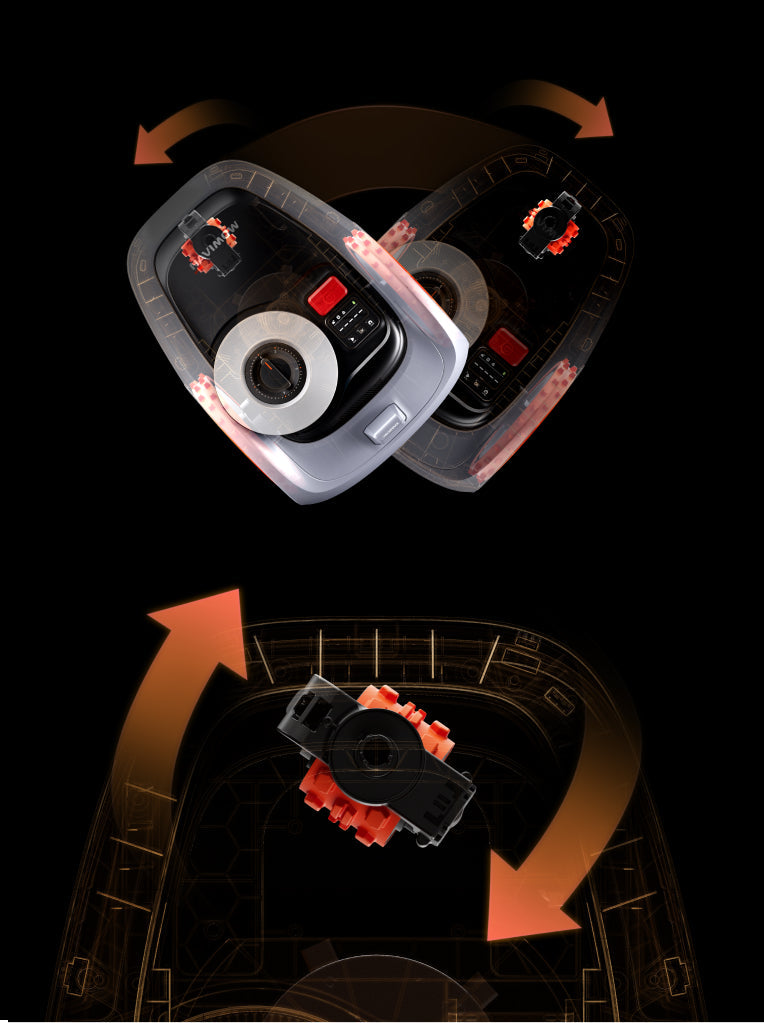
Robotic lawnmowers have revolutionized lawn care. They mow according to the "little and often" principle, which is the gentlest method for the lawn. The finely chopped clippings remain on the lawn as invisible fertilizer, freeing you from the weekly chore.
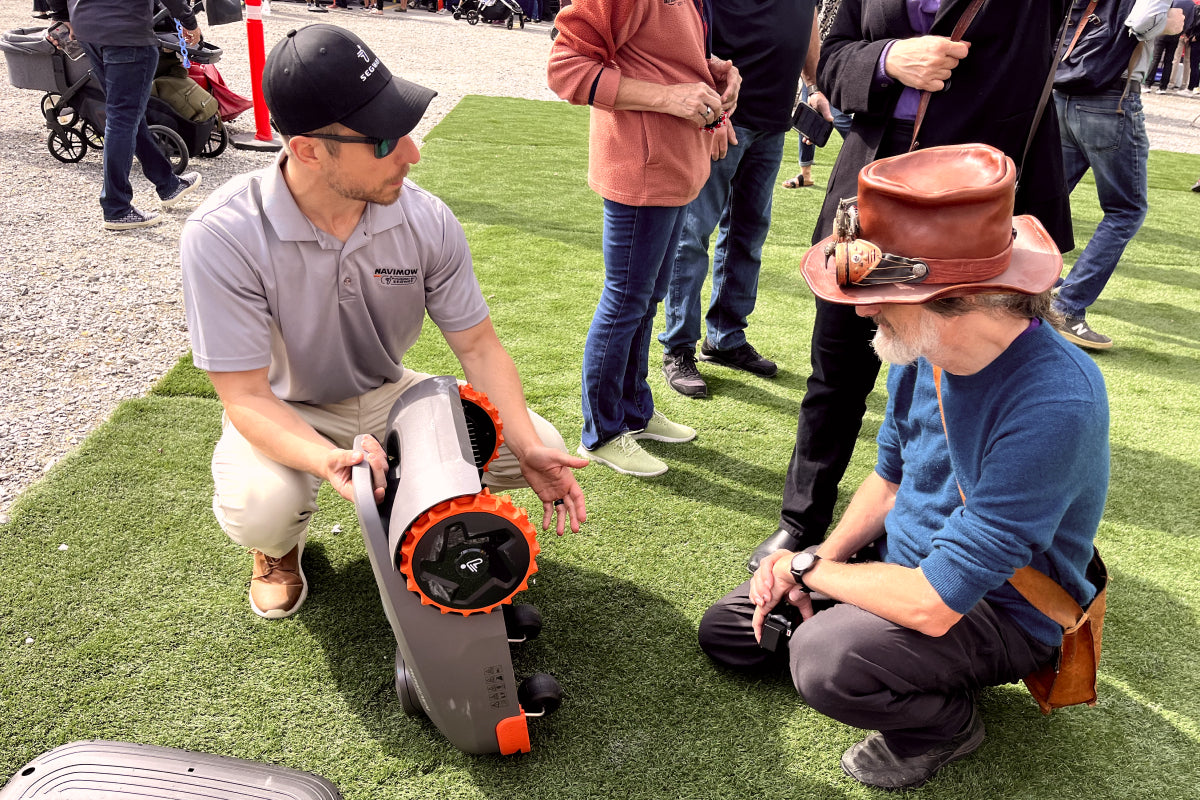
Particularly practical are models that operate entirely without cumbersome boundary wires, such as the Navimow series from Segway. These robotic lawnmowers navigate using GPS and can therefore mow even complex gardens with multiple flowerbeds and trees precisely and efficiently. The time-consuming installation of a boundary wire is completely eliminated.

For small to medium-sized gardens up to approximately 1000 m², the Navimow i105 model, for example, is an interesting option. It combines wireless GPS navigation with the ability to handle slopes of up to 35%. Those looking for an overview of the entire product range will find detailed information on all models and their advantages on the Navimow overview page. Such a robotic lawnmower ensures that your lawn is always kept at the ideal height after the crucial first cut, without you having to lift a finger. This allows you to fully enjoy the fruits of your labor – a perfect, green lawn – instead of constantly having to maintain it.
FAQs on the topic of "when to mow the lawn for the first time"
How often should I mow after that?
After the first mowing, the frequency depends on growth and the season. In spring, it can be weekly, in summer every 10–14 days. Always make sure not to remove more than about 1/3 of the blade length in one cut – this protects the plant.
Can I start directly with a low cutting height?
It's best not to. If you start too short, the young grass can become stressed – the roots aren't strong enough yet. A higher initial cut gives the lawn room to recover.
What if it rains or is very hot?
When it comes to mowing the lawn for the first time, the rule is: If the ground is wet, you should wait – the risk of unevenness or damage increases. In very hot weather, it's advisable to mow early in the morning or later in the day to avoid putting additional stress on the lawn.
Conclusion
The question "When should I mow the lawn for the first time?" is key to a successful gardening season. By paying attention not only to the calendar, but above all to the temperature, the grass height, and the weather, you'll always make the right decision. Combine the optimal time with thorough preparation, the correct cutting height, and sustainable aftercare through fertilization and, if necessary, reseeding. This way, you'll reward yourself with a vibrant, green, and dense lawn that is not only a feast for the eyes but also robust enough for summer activities. And with modern helpers like robotic lawnmowers, you can enjoy this sight all summer long with minimal effort. Listen to nature's signals, and your lawn will thank you.

Share