


When the sun comes out in spring and the weather slowly warms up, you'll see many garden owners happily waking their robotic lawnmowers from their winter slumber. But for the little helper to work reliably, its territory must be clearly defined. This is achieved via an inconspicuous but crucial detail: the boundary wire.
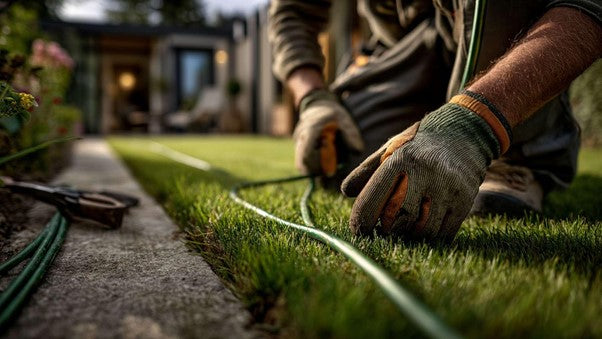
Many garden owners underestimate how much work goes into laying this cable. Meter by meter, it has to be buried in the ground along flowerbeds, paths, and hedges. It's a task that seems quite simple at first glance, but quickly turns out to be backbreaking work. Anyone who has ever spent hours kneeling and cursing because the wire isn't lying evenly knows exactly what we're talking about.
But thankfully, there are now devices that take this effort off your hands: so-called cable laying machines. They dig a narrow trench, lay the cable at the correct depth, and neatly close the trench again. In this article, we'll show you when renting such a machine is really worthwhile, what costs are realistic, and why more and more garden owners are already opting for wireless alternatives like the Navimow i Series.
Contents
- When is it worthwhile to rent a cable laying machine?
- This is how a cable laying machine works
- Cable laying machine rental – providers in Germany
- Cost overview – what renting costs
- Tips for smooth operation
- Rental stations near you – how to find the right provider
- Two alternatives for self-installation
- The conclusion
- FAQ
When is it worthwhile to rent a cable laying machine?
If you're planning to lay a cable for a robotic lawnmower and rent a machine, the main question is when the effort is truly worthwhile. This is always the case when a new system is being installed, an old wire is being replaced, or the garden is being redesigned. Especially with larger areas, this saves a tremendous amount of time.
This device is particularly useful on properties with many corners or when the boundary wire needs to be routed around obstacles. While doing this manually often results in an uneven finish, the machine ensures a consistent depth of approximately three to five centimeters. This is deep enough to protect the wire, but shallow enough to easily locate it again if needed.
In short, anyone who wants to save time, back pain, and stress should consider renting a cable laying machine. Especially if there's more than just a few meters of lawn to edge.

This is how a cable laying machine works
At first glance, the device appears unassuming, somewhat resembling a small plow on wheels. Inside, a rotating cutting wheel mills a narrow groove into the ground. Simultaneously, a guide rail precisely guides the boundary wire into this groove before the groove almost completely closes again.
The result is a uniform installation at a consistent depth, without open trenches or visible marks in the lawn. As Stiftung Warentest also emphasizes in its recent comparison, the efficiency of a robotic lawnmower depends heavily on precise installation and even cable routing. In practice, the devices achieve quite impressive results. Up to 400 to 500 meters of cable per hour can be laid, depending on the soil type and terrain. They are also well-suited for slopes or uneven areas. The machines themselves are usually compact, weighing around 20 to 30 kilograms, and fit easily into the trunk of a station wagon.
Cable laying machine rental – providers in Germany
Those who don't own a cable laying machine – and many garden owners don't – don't have to look far for alternatives. Numerous DIY stores and specialist retailers in Germany offer rental equipment specifically designed for installing robotic lawnmowers. The selection is vast, and the differences usually lie in price, service, and availability.
1. Bauhaus Rental Service
One of the best-known providers is the Bauhaus rental service. Here you will find robust, regularly serviced machines that are specifically suitable for robotic lawnmowers.
- Rental fee: approximately €60–90 per day
- Deposit: €100–150
- Advantages: nationwide presence, online booking possible, often with on-site instruction.
Customers who book online can pick up their appliance directly from their chosen branch – in many cities even on the same day. More information: bauhaus.info/service/mietgeraete
2. OBI Rental Equipment Service
OBI also offers cable laying equipment nationwide. The machines are designed for use with robotic lawnmower systems and come with accessories such as cables, pegs, and connectors.
- Rental fee: from €70 per day
- Advantages: large selection, flexible rental periods, advice in the store or by phone.
OBI is a particularly good choice for weekend projects, as many stores offer special "Saturday-to-Monday" flat rates. More information: obi.de/mietgeraete
3. Toom Rental Service
The rental station at the Toom hardware store is also well-organized. Here you can get advice on-site and take the right machine with you immediately.
- Rental fee: approximately €60–80 per day
- Advantages: personal consultation, weekend rates, and accessory packages available upon request. Many stores offer a short demonstration before the device is issued – ideal for first-time users.
More information: toom.de/service/baumarkt-mietgeraete
4. Regional specialist companies and garden centers
Beyond the major chains, it's worth looking at local options. In many regions – such as Bavaria, Hesse, or Mecklenburg-Western Pomerania – garden centers and hardware stores also rent out equipment. Searching online for terms like "cable laying machine robot lawnmower rental + [postal code]" often yields local providers within just a few clicks.
Cost overview – what renting costs
Rental prices for cable laying machines vary depending on the provider, region and rental period, but they are within a fairly manageable range.
| Period | Average price | Included service |
|---|---|---|
| 1 day | 60 – 90 € | Device + brief instructions |
| weekend | 100 – 140 € | Use Fri-Mon, often with a discount |
| Week | 200 – 250 € | longer projects or multiple areas |
| Deposit | 100 – 150 € | Refund upon proper return |
In addition, there are usually smaller costs for consumables, such as boundary wire, pegs, or connectors. Depending on the size of the garden, these amount to between 50 and 100 euros.

Tips for smooth operation
A cable laying machine will save you a lot of work. But a good result always depends on preparation. Following a few simple rules will ultimately save you time and rework.
Rule No. 1: Prepare the lawn
Before you begin laying the tile, the lawn should be mowed short and free of stones or branches. Any leaves should also be removed.
Rule No. 2: Plan on paper
A simple sketch plan is extremely helpful. Draw in the mowing areas, the obstacles, and the position of the charging station.
Rule No. 3: Start slowly
Even though the machine works quickly, there's no point in rushing. Drive the first section at a steady pace to check the depth and tracking.
Rule No. 4: Do a test run after laying the pipes.
Start the robotic lawnmower as soon as the cable is completely laid. Minor adjustments are normal, for example in narrow passages or corners. Many DIY stores offer a free follow-up check or consultation when you return the device. You should definitely take advantage of this.
Rule No. 5: Protect transitions and edges
Especially at passageways or paved edges, the cable can easily be damaged later.
Professional hack:
- Place a short piece of protective tubing over the wire. This will significantly extend its lifespan.
Rental stations near you – how to find the right provider
Whether in the far north or the deep south: cable laying machines for robotic lawnmowers can now be easily rented almost anywhere. The biggest difference lies less in availability than in service. And that varies significantly between urban and rural areas.
In larger cities like Hamburg, Munich, or Cologne, large DIY store chains usually handle the sales. They offer online reservations, weekend rates, and accessories directly on-site. Many stores even show real-time availability on their websites. This is advantageous when the spring season begins and demand increases.
In rural regions like the Allgäu, the Lüneburg Heath, or the Eifel, smaller gardening or equipment rental companies are often the first port of call. They rent out machines by the day and, if desired, even deliver them directly to your home, often including a brief demonstration. While this costs a bit more, it saves on transport and setup.
In up-and-coming regions like Saxony, Brandenburg, and Thuringia, digital rental platforms are gaining increasing importance. They cooperate with local dealers and enable a completely online process, from booking and payment to scheduling. Some even offer combined packages including cable installation and maintenance. This is a model that is particularly worthwhile for busy garden owners.
Tip:
- A simple Google search for "rent a robotic lawnmower cable laying machine + [postal code]" often immediately provides suitable providers in your area. Alternatively, you can reserve equipment directly online nationwide via the rental portals of OBI, Bauhaus, or Toom.

Two alternatives for self-installation
But not everyone wants to deal with the technical aspects and physical labor involved in laying the boundary wire. This is especially true if the garden is large or has many corners. In such cases, there are two sensible alternatives that can save time and effort.
1. Use a professional installation service.
Specialist companies handle the entire installation, from surveying to testing. The advantage is obvious: the cable is laid evenly and correctly, the charging station is optimally positioned, and any potential problem areas are immediately identified by the technician.
According to the gardening magazine Mein schöner Garten, more and more homeowners are opting for professional help because precisely laid boundary wires significantly extend the lifespan of the robotic lawnmower.
And the costs – depending on the size of the property – are usually between 200 and 600 euros. For many, this is worthwhile if precision is more important than doing it themselves. Anyone who would like to find out more beforehand can find further information in the article [“Robotic lawnmower installation service nearby – providers & tips”] .
2. Wireless systems – the modern alternative
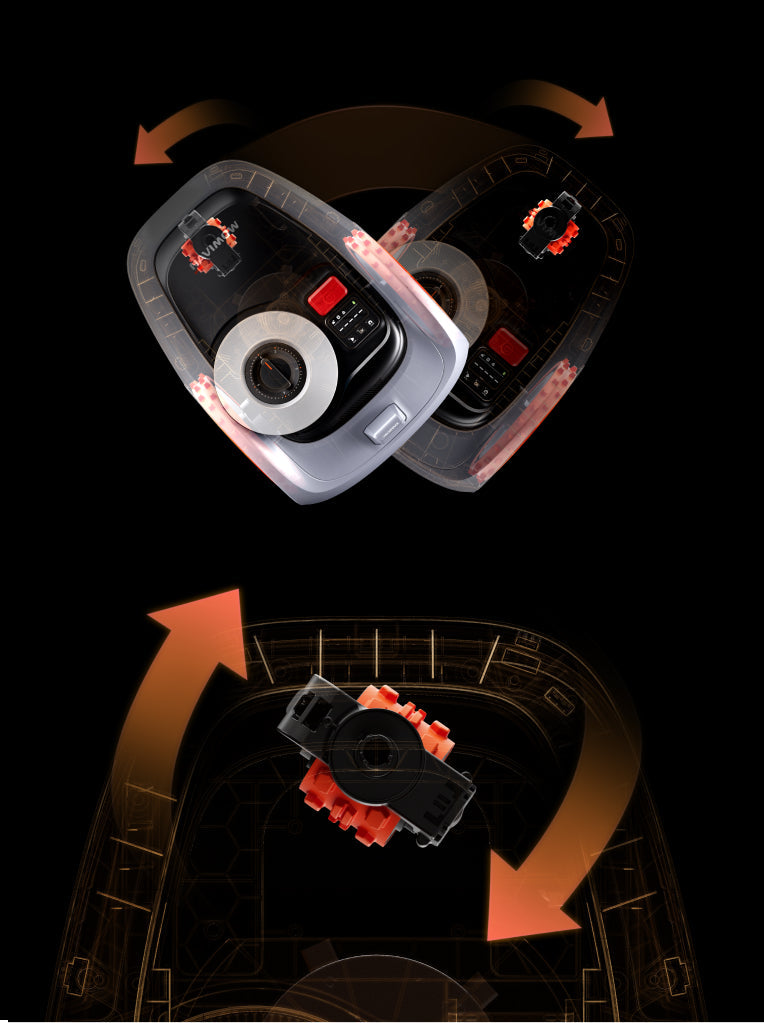
While conventional robotic lawnmowers still use wires to define their boundaries, modern models operate entirely without physical cables. Systems like the Navimow i Series virtually map the garden using GPS and sensors. This not only saves on cable installation but also makes future modifications particularly easy.
Whether you're planting new flowerbeds, adding a pool, or redesigning your lawn, adjustments can be made directly in the app. Thanks to the Navimow i Series technology with the Exact Fusion Locating System (EFLS 2.0), the robot detects its position with centimeter-level accuracy. Obstacles and small animals are also reliably detected – for example, via the integrated VisionFence™ camera and the Animal Friendly Mode.
For anyone planning for the long term or considering a new purchase anyway, a wireless system is a future-proof solution. It eliminates the need for trenching, there's no risk of cable breakage, and no readjustment is required.
Common mistakes when laying cables – and how to avoid them:
- Laid too shallowly: If the cable lies too close to the surface, it is easily damaged when scarifying or aerating. Ensure that it is buried approximately 3–5 cm deep to maintain a stable signal and protect the cable.
- Laid too deep: If the cable is buried deeper than 7 cm, the radio signal may become too weak. The robot will then no longer reliably detect the boundary.
- Corners planned too tightly: If the radius of curves is too small, the robot cannot turn cleanly. Leave a gentle curve at each corner instead of a sharp angle.
-
Unclean transitions: Cables should be neatly routed and run as parallel as possible at passages or islands. Crossings or excessively narrow sections often lead to malfunctions. As the technology portal Tink.de explains, many such errors can be rectified afterward with special repair kits.
- No test run required after installation: A short test run immediately shows whether the boundary wire is working correctly. This allows minor errors to be corrected directly before they cause problems later.
Reaching your goal faster with the right machine (a practical example)
A homeowner from Lower Saxony faced a typical problem: his newly purchased robotic lawnmower was supposed to work on a lawn of approximately 600 square meters, but the boundary wire first had to be laid. His plan was to do it himself over a weekend.
After almost two days of work with aching knees and uneven cable routing, he realized that the result wouldn't work. The signal transmission broke down in several places, and the robot was just going in circles along the lawn edges.
The homeowner rented a cable laying machine from a rental service. After a brief instruction session, the machine laid the entire cable neatly and evenly at the correct depth in just three hours. The total cost was manageable at just under €140. And the result was trouble-free operation from the very first use.
This example shows that investing in a rental machine quickly pays for itself, especially for larger areas or uneven terrain. And for those who, after this experience, decide they'd prefer to work completely wirelessly next time, cordless systems like the Navimow i105 offer a convenient alternative.

Conclusion
Renting a cable laying machine is the simplest and most efficient solution for many garden owners when installing a robotic lawnmower with a boundary wire. These devices save time and effort and deliver a result that is almost impossible to achieve manually.
In the long term, however, the technology will change. More and more homeowners are now opting for wireless robotic lawnmowers that require no physical installation. Systems like the Navimow i Series with Exact Fusion Locating System (EFLS 2.0) virtually map the garden and adapt flexibly as the environment changes.
This clearly demonstrates the next step in smart gardening: completely without cables in the ground, with less effort during setup and more precision in sustainable lawn care.
FAQ
How much does it cost to lay cables for a robotic lawnmower?
Depending on the size of the garden and the complexity of the job, the costs range between 200 and 600 euros. Those who lay the paving themselves usually only pay for materials (50–100 euros) and possibly machine rental (60–90 euros/day).
How do you find a broken cable on a robotic lawnmower?
A cable break detector or multimeter can be used to locate the faulty section. Many hardware stores rent these devices – the repair often only takes a few minutes.
How do you find the cable for the robotic lawnmower?
A signal generator or metal detector can help locate the wire in the ground. If it's buried shallowly, the cable can be carefully uncovered with a spade.
How do you lay boundary wires for robotic lawnmowers?
The cable should be laid 3–5 cm deep, evenly along the lawn edge. It's best to use a cable laying machine – it saves time and ensures a consistent depth.
What needs to be considered when laying cables?
Route cables evenly, avoid intersections, and secure them with protective conduit at passageways. The charging station should be positioned in an unobstructed area with a strong signal.
How much does it cost to lay 1 meter of cable?
Self-installation costs around 0.30–0.50 euros per meter, while professional installation usually costs 1.50–3 euros, depending on the type of flooring and the complexity of the job.

Share